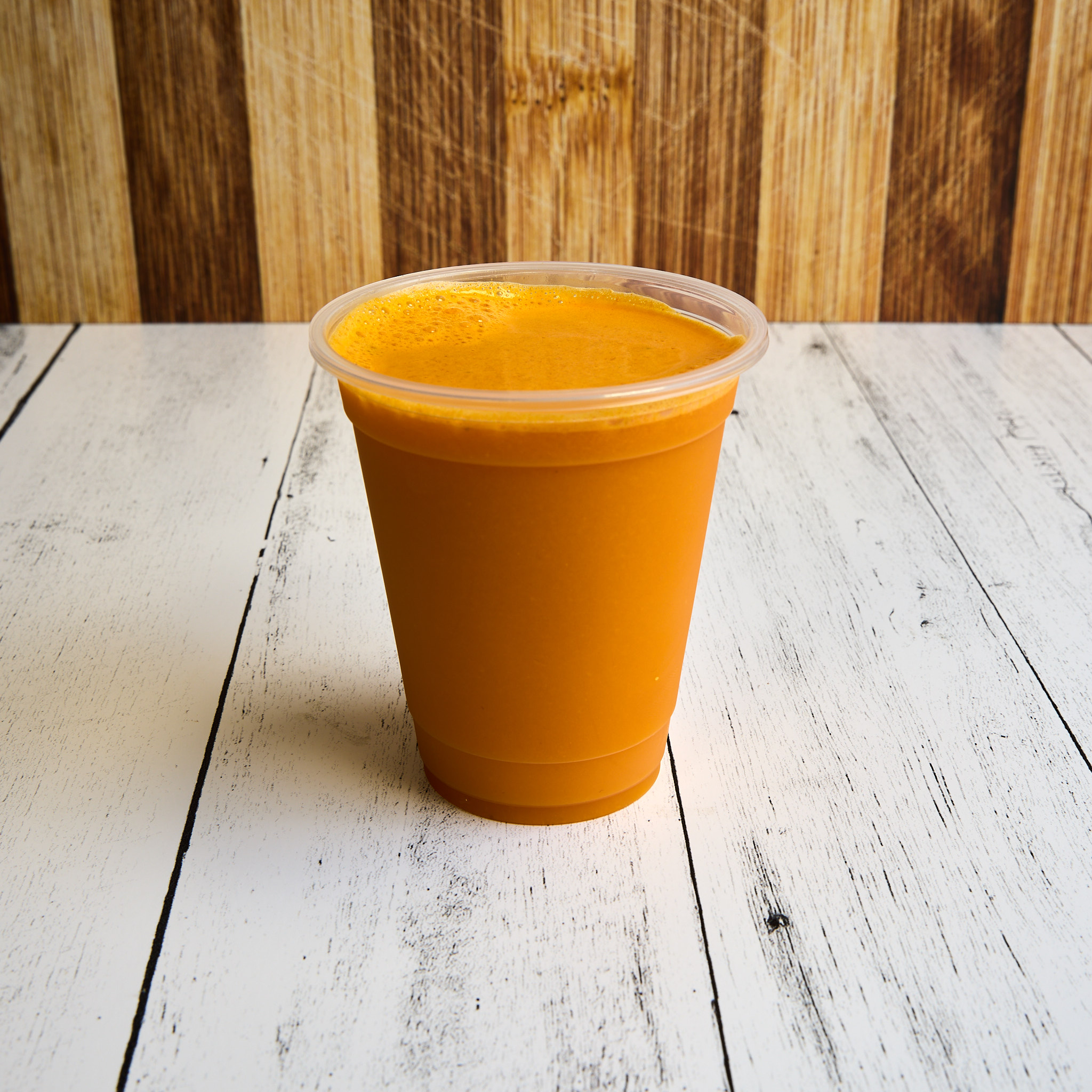
Cold-pressed juice is extracted by crushing produce and using pressure to separate the liquid from most of the pulp. “Cold-pressed” describes extraction; it does not tell you whether the finished juice was pasteurized, HPP-treated, or left untreated.
At our Longwood Avenue counter, “What does cold-pressed actually mean?” is usually followed by a more useful question: “Which juice should I start with?” The process matters, but taste, ingredients, and how a bottle fits your day matter just as much.
What “cold-pressed” means
A cold-press machine crushes produce and then uses pressure to separate the liquid from most of the pulp. The process does not rely on the fast-spinning blades used in a blender. That gives the finished juice its smooth, easy-to-sip texture.
The name describes the extraction method. It does not mean a juice is sugar-free, a complete meal, or a treatment for anything. Fruit and some vegetables naturally contain sugar, so the ingredient list and the balance of the recipe still matter.
Treatment can vary by product or batch, and “cold-pressed” alone does not answer whether a bottle was pasteurized, HPP-treated, treated another way, or left untreated. Check the bottle label or ask our team about the current batch before ordering. The FDA says untreated juice can contain harmful bacteria and advises children, older adults, pregnant people, and people with weakened immune systems to avoid it. Read the FDA juice-safety guidance.
We build recipes for balance: something bright, something earthy or green, and an ingredient that brings the whole bottle together. If you are new to vegetable-forward juice, a fruit-and-green blend is often an easier first sip than the most intense green option.
Cold-pressed juice vs. a smoothie
Both can start with real produce, but the texture and eating experience are different.
- Cold-pressed juice: the liquid is separated from most of the pulp. It is lighter in texture and quick to drink.
- Smoothie: whole ingredients are blended together, so more of the natural fiber stays in the cup. It is usually thicker and can feel more filling.
Neither format is automatically “better.” We suggest choosing based on what you enjoy and what you need from that order. A juice can sit alongside breakfast or lunch; a smoothie can be a more substantial snack, especially when it includes ingredients such as oats, nut butter, or protein.
How we think about a juice recipe
Color is the first clue, not a health score. Green recipes often lean on leafy vegetables and crisp produce. Orange or red bottles may feature carrot, citrus, beet, pineapple, or berries. Ginger and lemon can make a blend taste sharper even in a small amount.
Read the full ingredient list. If you know you dislike a strong ingredient—beet and ginger are common examples—start with a gentler blend. When ordering for someone with an allergy or dietary restriction, contact the shop before purchasing so our team can help with the current recipe and preparation environment.
How to choose your first bottle
- Start with flavor. Pick ingredients you already like instead of chasing the “greenest” label.
- Check the full list. The name on the bottle rarely tells the whole recipe.
- Decide how you will use it. A juice beside a meal is a different choice from a smoothie meant to hold you until lunch.
- Keep it cold. Follow the storage and use-by directions on the bottle, and refrigerate it promptly.
You can browse our current cold-pressed juices and wellness shots to compare ingredients before ordering.
Questions we hear at the shop
Does cold-pressed mean there is no added sugar?
No. “Cold-pressed” only describes the extraction process. Check the current ingredient listing for the exact bottle, and remember that fruit naturally contains sugar even when no sweetener is added.
Is cold-pressed juice the same as eating produce?
No. Juicing removes most of the pulp, so it does not provide the same fiber or eating experience as whole fruits and vegetables. It can be one part of a varied diet, not a replacement for every form of produce.
How long does a bottle stay fresh?
Use the date and storage directions on the bottle as your guide. Keep it refrigerated, and do not drink it if the seal, smell, or appearance seems wrong.
Find your first bottle
Compare today’s juice lineup, choose a flavor that sounds good, and order direct from our Bronx kitchen.